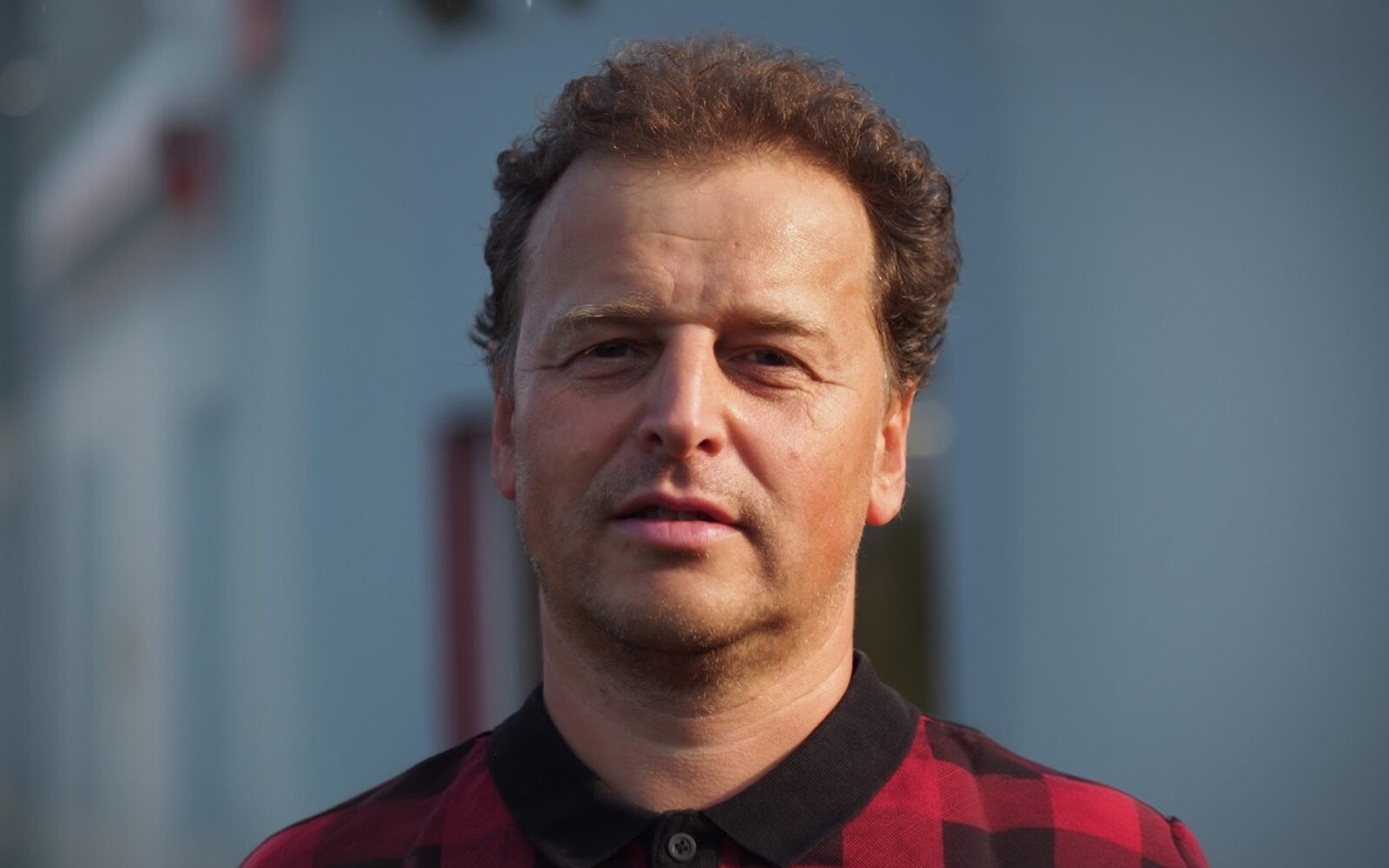
Tatiana Boussange’s experience in the carbon market is completely unique, spanning from the farmer-facing platform eAgronom to her current involvement in Armosys. As a Co-Founder and General Manager, she leads its efforts to build the scientific and modeling foundations necessary for verifiable carbon credits and automated data systems. For our Another Angle series, she openly discusses her pragmatic take on the human factor of data collection and the practical necessity of automated, high-integrity verification.
Tatiana, what was the most important insight regarding data and infrastructure that you brought with you from your experience at eAgronom to Armosys?
My biggest learning is that I had the tendency to believe the primary data was the most accurate source of information, with primary data being directly collected from farmers. And I never believed our partners or competitors who warned me about data collection being the hardest thing ever in this industry. The reality is that collecting data from farmers is indeed challenging because at some point, you will inevitably encounter the human factor that just doesn’t add up. We are all the same when we have to fill in our tax reports. It’s not something that brings value immediately, so you’re looking for shortcuts, of course.
That’s why manual data collection, albeit done directly by the farmer, only provides snapshots. It is subject to human impatience, inconsistency, and, quite practically, the burden of repetitive reporting.
This is why automated data collection becomes very important and it’s the best way forward to reduce the errors. From an infrastructure perspective, the objective is not to maximise granularity at all costs. It is to ensure that data is fit for purpose – accurate enough to uphold scientific integrity and robust enough for verification, without overburdening the system. At Armosys, we approach this as a data consistency problem. Where the customer project or methodology allows for it, we add an additional layer of consistency and agronomic rationality onto the data input that will feed our quantification engine. We apply this check, where possible, because we are conscious that despite current data automation and verification technologies such as the use of satellite imagery for broad and frequent coverage, in-field sensors for localised accuracy, machinery data for operational traceability, and farmer inputs for contextual understanding, the data will be imperfect but increasingly usable. No single source is sufficient and the reliability comes from how they reinforce each other. The goal is not to remove humans, but to reposition them – away from repetitive validation tasks and towards systems that are more consistent and scalable.
You openly advocate that the carbon market can only ever work if the farmers support it. Looking at the infrastructure side now, what is the missing link in ensuring that carbon credits actually incentivise real-world change in land management rather than just giving farmers more paperwork?
Today, many carbon programs are optimised for compliance and not for decision-making. That is why they are often perceived as administrative overhead. If a farmer only engages with a carbon programme once or twice a year, it remains external and will always feel like reporting.
What’s missing are continuous, actionable feedback loops.
For carbon to drive real change, the infrastructure needs to reflect the impact of practices within a season and integrate into existing farm management workflows. Today, we see a market that is very pragmatic… less driven by climate targets, but more by farming reality targets. The question is – how can we produce the same or more given the weather conditions or the cost of goods that we have? Ultimately, it’s about this: How do we make farmers successful again?
At Armosys, we provide the underlying modeling and data infrastructure that complements platforms like eAgronom. While they lead the vital work of managing farmer relationships, we ensure the data collected for certification brings insights that reward farmers for their participation, so that our customers, such as eAgronom, can support better decision-making at farm level based on insights specific to their field or farm.
We are always working in the background in support of those who actually face the farmers. The goal is to reuse that data to generate insights for day-to-day operations. When this works, incentives shift naturally: better soil health improves resilience, better decisions increase farm profitability and carbon revenue becomes an additional benefit rather than the sole driver. That is ultimately how carbon transitions from a compliance mechanism into a practical tool for change. Carbon is a proxy for increased organic matter in soils, it comes with unmeasured co-benefits.
Nature is complex and can be unpredictable, yet the market wants clear rules – and at the same time, the science behind soil carbon is constantly evolving. How do you balance the need for extreme scientific rigor with the market’s demand for scalable, standardised methodologies that can work across the whole of Europe?
This tension is structural: science evolves, but markets require stability. In Europe, this is particularly visible because there is a strong drive to regulate the industry.
Just to give you context, the global scene is primarily driven by the voluntary carbon market, where there is no legal obligation to buy or generate credits. Instead, activity is driven by corporate targets and the financial industry’s players. In Europe, the landscape is different because there has always been a tendency to regulate. With the 2022 introduction of the Carbon Removals Certification Framework (CRCF), the EU Commission’s objective was to harmonise and streamline the diversity of methodologies and approaches. By standardising how credits are generated, Europe is moving away from the purely voluntary model toward a regulated framework. Then again, this shift toward higher standards is exactly why our customers’ adherence to rigorous, verified methodologies is no longer just a best practice; it’s becoming the blueprint for the new regulated reality.
And to answer your question – the solution is not to force everything into one box, but to separate our concerns. Standardisation is very effective at the infrastructure level. Indeed, a well thought-through infrastructure and model architecture enables modularity, customisation and flexibility down the line. You must have flexibility to reflect the actual diversity of global farming realities: soil variability, climate differences, farming practices, farm sizes and cropping systems, input data formats and completeness.
At Armosys, we design our systems with a modular architecture. We have a stable core that ensures scientific and infrastructure consistency and trust, but we use adaptable modules that can evolve as new research, methodology changes or new regulations come to light. This allows us to support multiple standards and adapt as the landscape and our customers evolve.
Ultimately, carbon markets and regulators want a better framework and also regulate the market approach to generate a demand for carbon credits. To meet that demand, credibility won’t come from claiming absolute certainty. It comes from being transparent about scientific uncertainty and building infrastructure that can sustain both rigour and scale over time.
Now is the time when we will see a real filtering process: the competent, agriculture-focused players will stand out against those who only joined the market because they saw an opportunity.